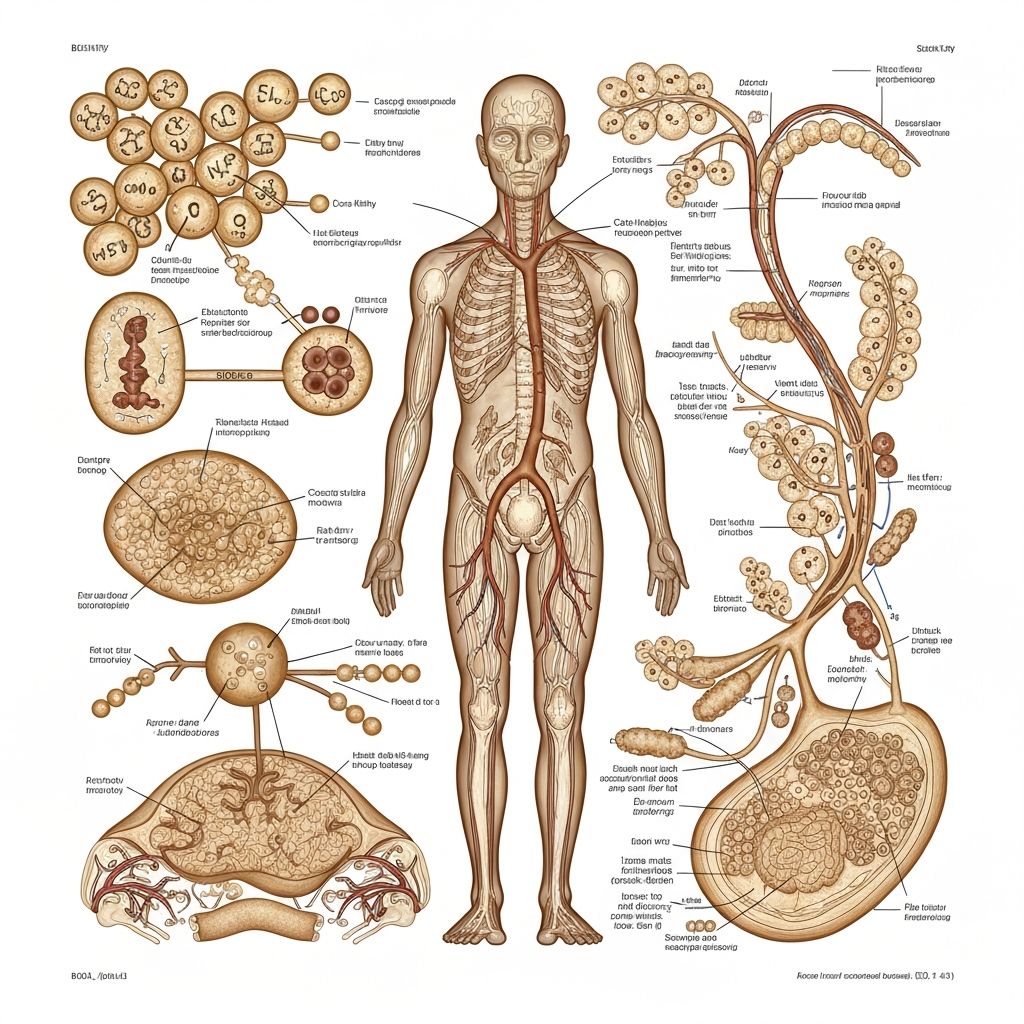
Understanding Energy Homeostasis
Body weight stability represents one of the most precisely regulated physiological systems in human biology. Despite daily variations in food intake and energy expenditure, most individuals maintain relatively stable body weight over months and years. This remarkable constancy results from sophisticated biological mechanisms that continuously adjust energy intake and expenditure to maintain equilibrium.
This process, called energy homeostasis or metabolic homeostasis, involves interconnected feedback systems operating across multiple biological levels—from molecular signaling within individual cells to coordinated responses across organ systems.
The Central Role of the Hypothalamus
The hypothalamus, a small region of the brain approximately the size of a pea, serves as the master regulator of energy homeostasis. This remarkable structure integrates information from multiple sources and orchestrates responses that maintain energy balance. The hypothalamus contains specialized neurons sensitive to hormonal signals, temperature changes, nutrient availability, and other metabolic indicators.
Within the hypothalamus, the lateral region is often called the "hunger center" because stimulation produces increased appetite, while the medial region is called the "satiety center" because its activation produces feelings of fullness. However, this oversimplification of distinct centers has evolved as neuroscience has revealed more complex interactions involving distributed networks and multiple neurotransmitter systems.
Key Regulatory Hormones
Several hormones work in concert to regulate energy intake and expenditure. Understanding these hormones provides insight into how the body maintains energy balance:
Leptin: The Satiety Signal
Leptin, produced primarily by adipose tissue (fat cells), acts as a long-term energy reserve indicator. Often called the "satiety hormone," leptin circulates at levels proportional to body fat stores. When leptin levels are high, the hypothalamus receives signals indicating abundant energy stores, typically producing reduced appetite and increased energy expenditure. When leptin levels are low, signals indicate depleted energy stores, typically increasing appetite and decreasing energy expenditure.
Ghrelin: The Hunger Signal
Ghrelin, produced primarily by the stomach, serves as an acute hunger signal. Ghrelin levels rise when the stomach is empty and fall after eating. This hormone stimulates appetite and is released before meals, contributing to meal initiation. Ghrelin levels show circadian patterns, increasing before typical meal times.
Insulin: The Energy Storage Signal
Insulin, produced by the pancreas in response to elevated blood glucose, signals nutrient abundance. Beyond its role in regulating blood glucose, insulin influences energy homeostasis by affecting appetite signaling and metabolic rate. Insulin crosses the blood-brain barrier and acts directly on hypothalamic neurons to reduce appetite.
Peptide YY: The Post-Meal Signal
Peptide YY (PYY), released by intestinal cells after eating, acts as a satiety signal. PYY levels rise proportional to meal size and caloric content, contributing to feelings of fullness and reduced subsequent food intake.
Metabolic Adaptation and Set Point Theory
One intriguing aspect of energy homeostasis is the apparent existence of a defended body weight or "set point"—a weight range that the body seems to defend through adjustments in appetite and metabolic rate. When body weight falls below this set point, compensatory increases in appetite and metabolic efficiency occur. When body weight exceeds this set point, opposite adjustments typically follow.
Set point theory, while useful conceptually, represents a simplification of complex adaptive processes. More accurately, the body appears to defend a "settling point" that reflects the interaction between biological systems and behavioral, environmental, and psychological factors.
Non-Hormonal Factors in Energy Regulation
Beyond hormonal signaling, numerous other factors influence energy homeostasis:
- Temperature regulation: Thermogenesis (heat production) represents a significant component of total energy expenditure and is regulated through multiple mechanisms
- Physical activity: Both deliberate exercise and spontaneous activity influence energy expenditure and can trigger adaptive compensatory responses
- Nutrient composition: Different macronutrients have different thermic effects, with protein requiring more energy to digest than carbohydrates or fats
- Sleep and circadian rhythms: Sleep quality and duration influence appetite-regulating hormones and metabolic processes
- Stress and psychological factors: Stress hormones and emotional states influence food intake patterns and metabolic rate
Sensory and Cognitive Factors
While often overlooked in discussions of energy homeostasis, sensory and cognitive factors play important roles. The sight, smell, and taste of food activate neural pathways related to reward and desire. These sensory experiences influence both appetite initiation and satiation. Interestingly, sensory variety can enhance appetite—a phenomenon called sensory-specific satiety—whereby exposure to single flavors produces earlier fullness than exposure to multiple diverse flavors.
Cognitive factors, including learned associations between eating contexts and satiation, cultural eating patterns, and psychological relationships with food, also influence food intake patterns and energy balance.
Individual Variability
While energy homeostasis operates through universal biological principles, significant individual variation exists in set points, hormonal responsiveness, and adaptive responses. Genetic factors, early developmental experiences, environmental exposures, and behavioral patterns all influence how individual bodies regulate energy.
Conclusion
Energy homeostasis represents a complex, multi-level biological system maintaining remarkable stability despite constant physiological demands and environmental variation. Understanding these mechanisms provides context for appreciating both the sophistication of biological regulation and the genuine individual differences in metabolic processes and weight stability.
Information Disclaimer: This article presents educational information about metabolic science. It does not constitute medical advice and should not replace professional consultation. Individual metabolic responses vary significantly, and personal decisions regarding nutrition should involve qualified healthcare professionals.